Get in your inbox the latest News and Offers from
- Frajam St, Tehran, Iran

- Office Time:
- Saturday to Thursday 8:00am - 6:00pm
- Call Us:
- +982177247147
- Email:
- info@ariotec.ir
Smart Design and Manufacturing of Medical Devices
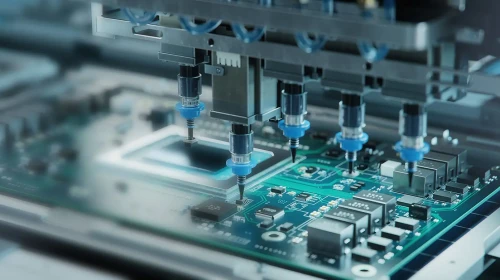
Smart Design and Manufacturing of Medical Devices
The design and manufacturing of medical devices require a high level of precision, reliability, and compliance with strict regulatory standards. With the integration of smart technologies, modern medical equipment is becoming more efficient, connected, and patient-centered. Intelligent design plays a vital role in improving healthcare outcomes and ensuring safety.
Defining Clinical and Technical Requirements
Smart medical device development begins with a thorough understanding of clinical needs and user requirements. Engineers and healthcare professionals collaborate to define functionality, accuracy, safety, and usability. Regulatory requirements, such as ISO and FDA standards, must also be considered from the earliest design stages.
Intelligent Electronic and Embedded System Design
Medical devices increasingly rely on advanced electronics and embedded systems. Microcontrollers, sensors, and wireless communication modules enable real-time data collection and monitoring. Smart power management and fault-detection mechanisms ensure continuous and safe operation, even in critical environments.
PCB Design and System Integration
High-quality PCB design is essential for medical devices, where reliability and signal integrity are critical. Careful component selection, optimized layouts, and electromagnetic compatibility (EMC) considerations help ensure accurate performance. System integration focuses on seamless interaction between hardware, software, and mechanical components.
Prototyping, Validation, and Risk Management
Prototyping allows teams to validate performance, usability, and safety before mass production. Rigorous testing and risk analysis, such as Failure Mode and Effects Analysis (FMEA), help identify potential issues early. Compliance testing ensures the device meets medical safety and quality standards.
Smart Manufacturing and Quality Assurance
Intelligent manufacturing processes leverage automation, data tracking, and quality control systems to ensure consistency and traceability. Each production stage is carefully monitored to meet regulatory and quality requirements. Continuous improvement processes help enhance reliability and reduce manufacturing risks.
Human-Centered and Ergonomic Design
Medical devices must be intuitive and comfortable for both patients and healthcare professionals. Human-centered design focuses on usability, accessibility, and ergonomics. A well-designed device reduces user error and improves efficiency in clinical environments.